What the wool buyers left behind
Before it held a roulette wheel, the upstairs room held bales and buyers. The building has not forgotten, and neither have we.
A room built for looking at wool
Anyone who has stood in a wool buyer's sample room will recognise the design. Long benches run beneath tall windows that face north, so the light is cool and even all day. Buyers needed to judge the colour and crimp of a fleece without shadows or glare, and the room was built around that single job.
When we cleared the room, we found the evidence. Pencil tallies ran along the window frame, and the floor was worn in a path from the stairs to the benches. There was a hook in the ceiling where a set of scales had hung, and in one corner, the faded outline of a chalked grid. We left most of it exactly where it was.
We think of the room as a collaboration with the wool buyers, who did the hard work of choosing the light and the proportions. All we did was lay down the baize. If any of them walked up the stairs today, we hope they would recognise the place and nod.
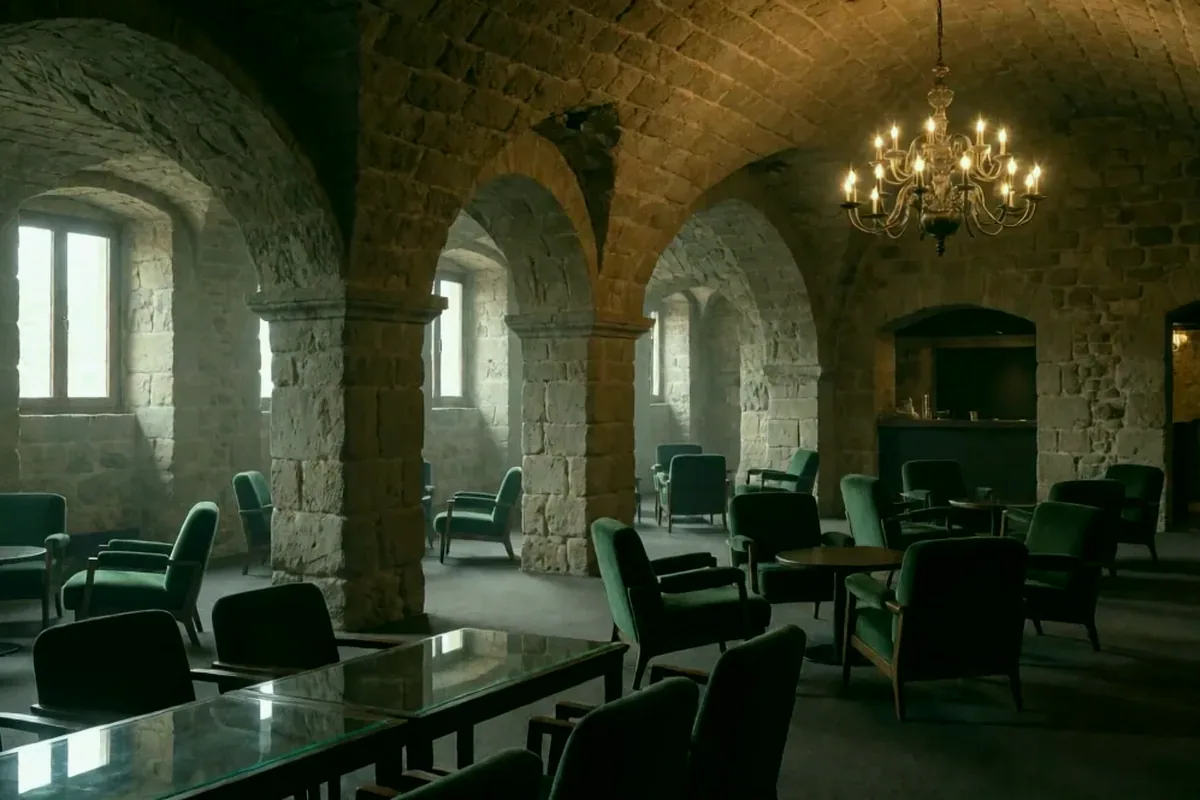
What we kept
The beams and the boards
The ceiling beams are original hardwood, dark with age and still solid. The floorboards were sanded lightly and oiled, leaving the old grooves visible. Where the benches stood, brass lamps now hang low over the baize, and the pencil tallies are still there on the frame if you look closely.
The north light
It would have been simple to cover the windows and light the room artificially. We did the opposite. The natural north light is why the room is such a pleasure to play in, and in the late afternoon it turns the baize a deep, restful green. Roulette has rarely looked so good.
A building that remembers
Old buildings keep their habits. The third stair creaks, the door swings shut by itself and the room is always a degree cooler than you expect. Megan swears the wheel runs slightly truer on the side nearest the windows, which is the kind of thing a building like this lets you believe. We've stopped fixing these things. They tell guests that the building has a past, and that its present is only one more chapter.